The 7 Best Municipal & Public Golf Courses in North Carolina (2026 Guide)
From Wilmington’s restored 1926 Donald Ross classic and Tanglewood Park’s 1974 PGA Championship stage to Bryan Park, Pete Dye’s Oak Hollow, Charlotte’s Harry L. Jones, Sr., NC State’s Lonnie Poole, and Asheville Muni, discover the 7 best municipal golf courses in North Carolina.
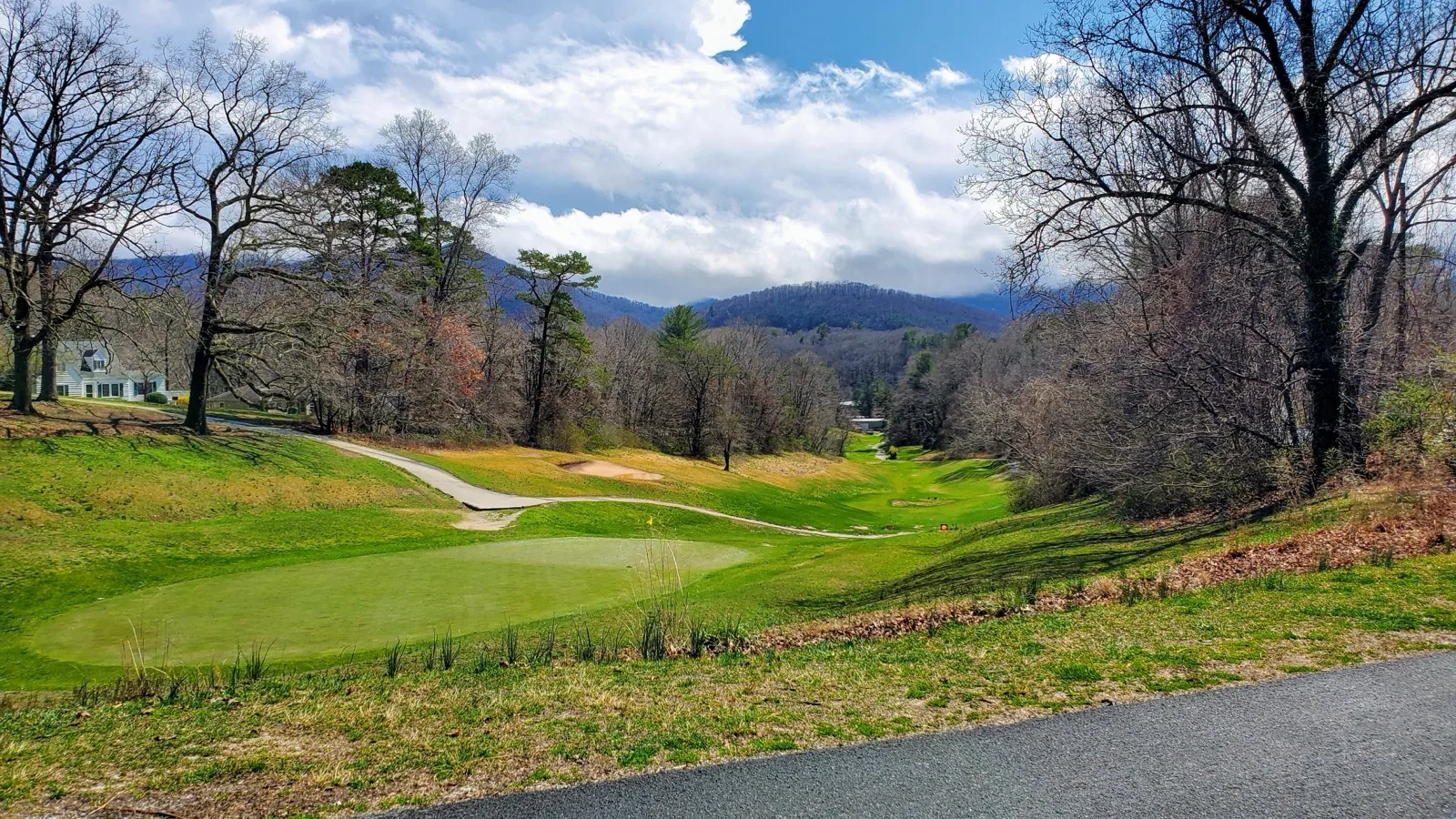
While North Carolina’s Sandhills resorts capture the global spotlight, the Tar Heel State quietly boasts one of the richest collections of municipal and public-access golf courses anywhere in America. From the Atlantic pines of Wilmington across the Piedmont Triad and Charlotte to the mist-draped Blue Ridge Mountains, cities, counties, and public universities steward layouts crafted by Donald Ross, Robert Trent Jones Sr., Pete Dye, Rees Jones, and Arnold Palmer—often for less than $65.
Read Full Regional Overview +Hide Regional Overview −
That public pedigree is backed by genuine championship history. County-owned Tanglewood Park outside Winston-Salem hosted Lee Trevino’s famous triumph over Jack Nicklaus at the 1974 PGA Championship as well as the 1986 U.S. Amateur Public Links, while Greensboro’s municipal Bryan Park Champions Course staged the 2010 U.S. Amateur Public Links along Lake Townsend. Paired with two authentic 1920s Donald Ross municipals in Wilmington and Asheville, a lakeside Pete Dye bargain in High Point, Charlotte’s premier county layout, and NC State’s skyline showcase in Raleigh, here is Firway’s definitive 2026 guide to the seven best municipal and public golf courses in North Carolina.
| Course | Location & Operator | Heritage & Architect | Par & Yardage | 2026 Green Fees | Key Highlight |
|---|---|---|---|---|---|
| Wilmington Municipal | Wilmington · City of Wilmington | 1926 · Donald Ross / John Fought | Par 71 · 6,784 yds | $33–$48 (Walking) | Restored 1926 Donald Ross coastal pine classic |
| Tanglewood Park (Championship) | Clemmons · Forsyth County | 1958 · Robert Trent Jones Sr. | Par 72 · 7,097 yds | $59–$69 (Twi: $40) | 1974 PGA Championship & 1986 US PubLinks host |
| Bryan Park (Champions) | Browns Summit · City of Greensboro | 1990 · Rees Jones | Par 72 · 7,255 yds | $60–$71 (Cart Incl.) | 2010 U.S. Amateur Public Links host on Lake Townsend |
| Oak Hollow Golf Course | High Point · City of High Point | 1972 · Pete & Perry Dye | Par 72 · 6,564 yds | $15–$46 (Walk/Cart) | Lakeside Pete Dye design with railroad ties & island tee |
| Harry L. Jones, Sr. | Charlotte · Mecklenburg County | 1987 · Dr. Michael Hurdzan | Par 72 · 7,360 yds | $51–$62 (Twi: $39) | Charlotte’s premier 7,360-yard county championship track |
| Lonnie Poole Golf Course | Raleigh · NC State University | 2009 · Arnold Palmer Design | Par 72 · 7,358 yds | $70–$130 (Public) | NCAA host with downtown Raleigh skyline panoramas |
| Asheville Municipal | Asheville · City of Asheville | 1927 · Donald Ross | Par 72 · 6,294 yds | $32–$42 (Dynamic) | Historic 1927 Ross mountain muni & Skyview heritage |
01. Wilmington Municipal Golf Course (Wilmington)
2026 Green Fees: $33–$48 (Walking) · 9 Holes: $22–$30
Architect: Donald Ross (1926) / John Fought (2014 restoration)
Operator: City of Wilmington
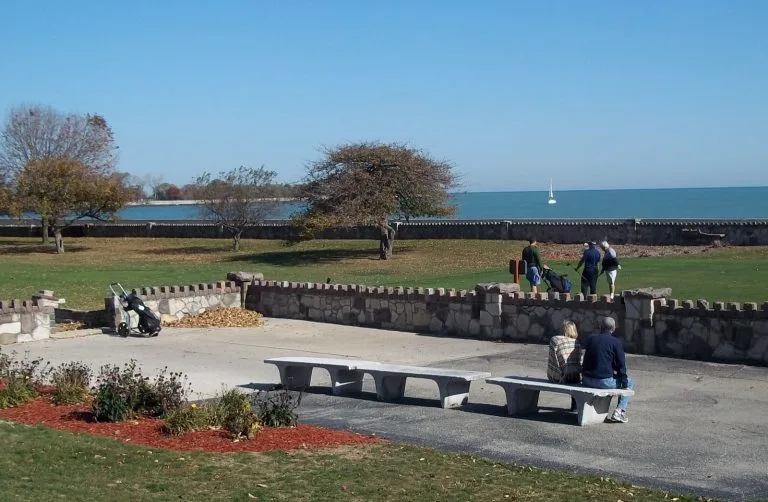
Perched just inland from Wrightsville Beach on an avenue named in honour of its creator, Wilmington Municipal Golf Course—affectionately known across the Carolinas simply as “The Muni”—is arguably the finest sub-$50 Golden Age municipal course in the American South. Commissioned by the City of Wilmington and laid out by Donald Ross in 1926, the parkland routing winds smoothly through mature longleaf pines and sandy coastal soil, placing a premium on strategic tee-shot angles rather than brute length.
In 2014, acclaimed architect John Fought led a meticulous restoration informed by Ross’s original drawings, re-establishing authentic green contours, sharp false fronts, and vintage fairway bunkering across the 6,784-yard Par-71 layout. Walking is the traditional way to play here: residents of New Hanover, Pender, and Brunswick counties pay $33–$38 for 18 holes walking, while visiting non-residents pay just $43–$48 (plus $15 if taking a cart), with public tee times opening seven days ahead at 7:00 AM.
02. Tanglewood Park — Championship Course (Clemmons / Winston-Salem)
2026 Green Fees: $59–$69 · Twilight: $40
Architect: Robert Trent Jones Sr. (1958)
Operator: Forsyth County
Owned and operated by Forsyth County inside a sprawling 1,100-acre estate along the Yadkin River west of Winston-Salem, the Championship Course at Tanglewood Park carries major-championship pedigree rarely found in county-run golf. Opened in 1958 to a muscular design by Robert Trent Jones Sr., the course hosted the 1974 PGA Championship—where Lee Trevino famously held off Jack Nicklaus by a single stroke—before welcoming the 1986 U.S. Amateur Public Links won by Billy Mayfair and serving as a longtime Senior PGA Tour stop.
Stretching up to 7,097 yards (Par 72) through rolling Piedmont hardwoods, classic runway tee boxes, and sweeping, heavily guarded greens, Tanglewood demands disciplined long-iron approaches and clever lag putting. Standard 18-hole green fees sit at $59 Monday to Friday ($40 for seniors and juniors) and $69 at weekends, dropping to $40 for twilight play after 4:00 PM—with public tee times available seven days in advance.
03. Bryan Park — Champions Course (Browns Summit / Greensboro)
2026 Green Fees: $60–$71 (Cart Incl.) · Twilight: $48–$51
Architect: Rees Jones (1990)
Operator: City of Greensboro
Situated north of Greensboro on a peninsula jutting into scenic Lake Townsend, the City of Greensboro’s Bryan Park Golf & Enrichment Center pairs 36 holes of municipal golf with one of the best practice complexes in the Piedmont Triad. Its flagship Champions Course, designed by Rees Jones and opened in 1990, regularly features near the top of North Carolina public-course rankings and hosted the 2010 U.S. Amateur Public Links Championship.
At 7,255 yards from the Blue tees (Par 72, slope 142), the Champions layout tests every club in the bag—highlighted by a dramatic waterfront closing stretch bordering Lake Townsend, generous landing zones flanked by sculpted sand traps, and brisk, true-rolling greens. Green fees including cart and tax run roughly $60 Monday to Thursday, $63 on Fridays, and $71 at weekends (with $48–$51 twilight slots and a $5 discount for Greensboro residents).
04. Oak Hollow Golf Course (High Point)
2026 Green Fees: $15–$29 (Walking) · $37–$46 (Cart)
Architect: Pete Dye & Perry Dye (1972)
Operator: City of High Point
If you want to experience authentic Pete Dye risk-reward architecture without paying resort tariffs, look no further than the City of High Point’s Oak Hollow Golf Course. Opened in 1972 alongside High Point City Lake—where Dye and his son Perry crafted a lakeside parkland loop long before the architect’s grandest resort commissions—Oak Hollow brims with signature Dye touches, from railroad-tie bulkheads and deep pot bunkers to small, contoured greens and a memorable island tee.
At 6,564 yards (Par 72), Oak Hollow rewards precision over raw power, particularly along the water-lined holes hugging the reservoir. Best of all, its pricing remains delightfully old-school: weekday walking rates start at just $15–$20 ($37 with cart), while weekend 18-hole cart rates sit at $46 before noon and $40 afterwards ($29 weekend afternoon walking), bookable up to 14 days in advance.
05. Harry L. Jones, Sr. Golf Course (Charlotte)
2026 Green Fees: $51–$62 · Twilight: $39
Architect: Dr. Michael Hurdzan (1987)
Operator: Mecklenburg County
Just ten minutes southwest of Uptown Charlotte and minutes from Charlotte Douglas International Airport, Harry L. Jones, Sr. Golf Course—long known to locals as Renaissance Park before being renamed in honour of the former Mecklenburg County manager—serves as the Queen City’s premier 18-hole municipal championship test. Designed by environmental golf architect Dr. Michael Hurdzan in 1987, the property rolls across mature Carolina hardwoods, steep creek ravines, and sweeping upland meadows.
Capable of stretching to an intimidating 7,360 yards (Par 72) from the back markers while offering four welcoming forward tee sets down to 5,315 yards, the layout demands smart tee-shot placement around doglegs and creek crossings. Standard public green fees sit around $51 on weekdays and $62 at weekends, dropping to roughly $39 for twilight rounds after 5:00 PM via the Mecklenburg County Golf portal (while history-minded visitors can also pair a quick nine at the county’s Dr. Charles L. Sifford Golf Course near Revolution Park).
06. Lonnie Poole Golf Course (Raleigh)
2026 Green Fees: $70–$130 (Public) · Twilight from 3:30 PM
Architect: Arnold Palmer Design Company (2009)
Operator: NC State University
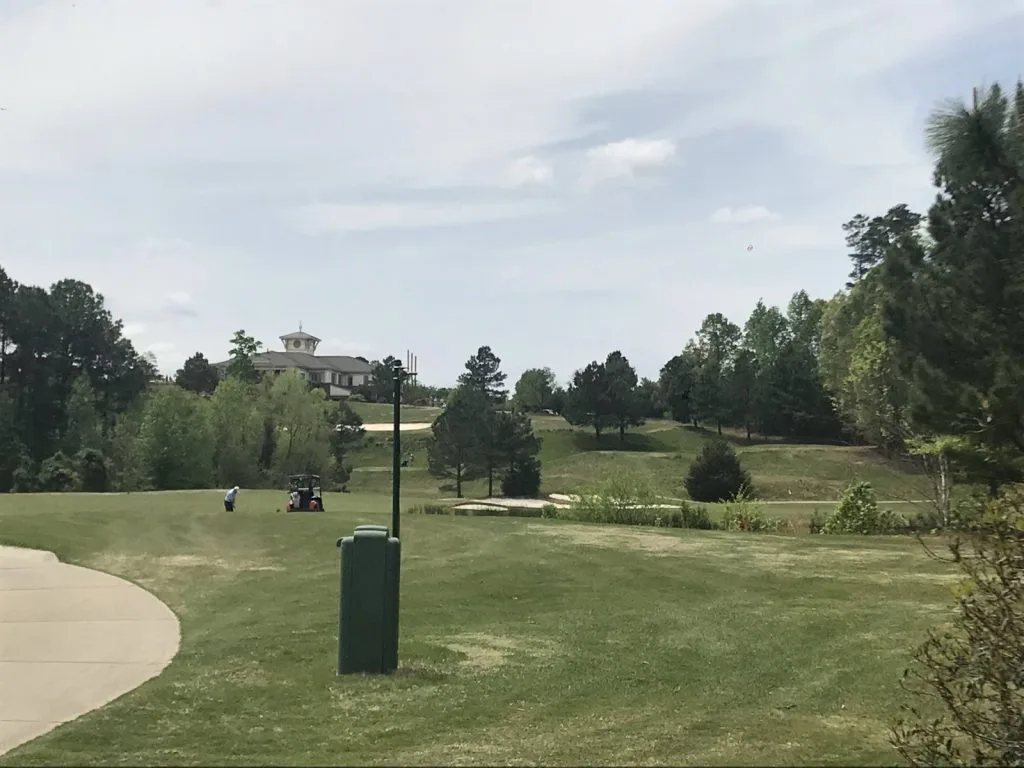
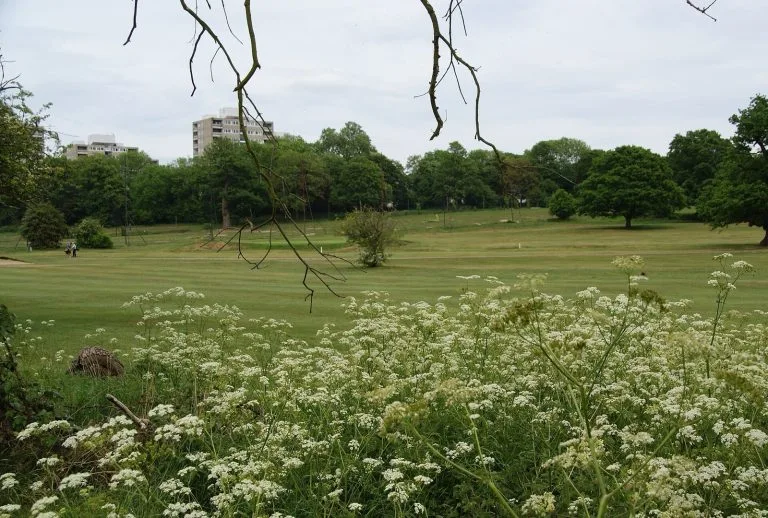
Rolling Piedmont turf, sculpted white bunkering, and the signature cupola clubhouse at NC State’s Lonnie Poole Golf Course in Raleigh. Photograph by Pithon314 (CC BY-SA 4.0).
Anchoring the Research Triangle’s capital city on North Carolina State University’s Centennial Campus, Lonnie Poole Golf Course brings big-time championship polish to everyday public golfers. Opened in 2009 by Arnold Palmer Design Company and co-designed alongside NC State alumni architects Erik Larsen and Brandon Johnson, the 7,358-yard Par-72 course climbs brisk Piedmont ridges to reveal sweeping panoramic views of the downtown Raleigh skyline—most famously from the elevated 11th tee and finishing stretches.
Certified as an Audubon International Signature Sanctuary and host to multiple NCAA Division I Regionals, Lonnie Poole doubles as a living turfgrass laboratory with immaculate Champion Bermuda greens and dramatic, deep-faced bunkers. Visiting public golfers can book tee times up to 10 days ahead, with weekday walking rates starting around $70, weekend walking from ~$95, dynamic riding rates between $75 and $130+, and reduced twilight rates beginning at 3:30 PM.
07. Asheville Municipal Golf Course (Asheville)
2026 Green Fees: $32–$42 (Dynamic Public)
Architect: Donald Ross (1927)
Operator: City of Asheville
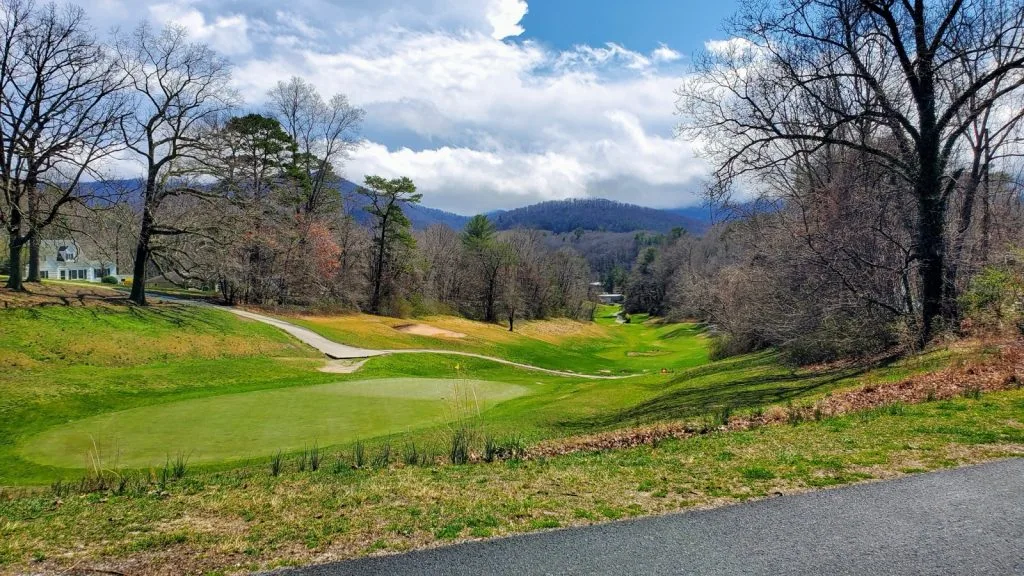
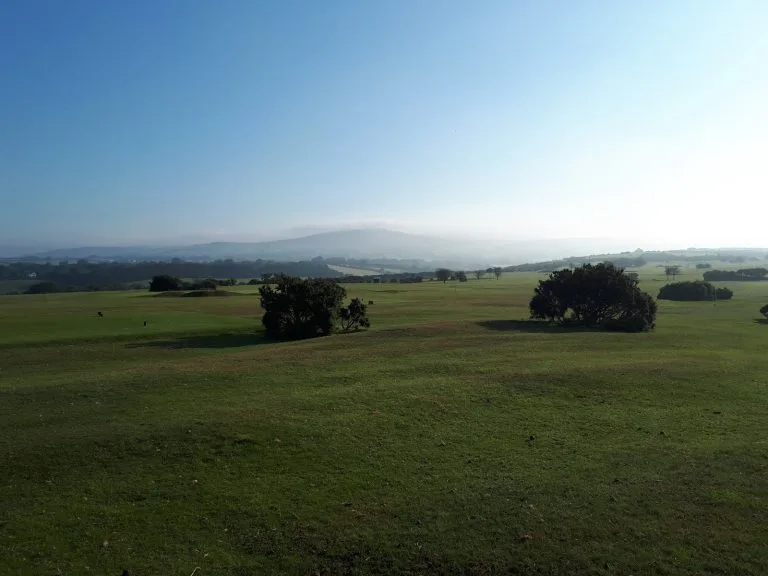
Sweeping Blue Ridge Mountain vistas framing the 1927 Donald Ross fairways at Asheville Municipal Golf Course. Photograph by Upstateherd (CC BY-SA 4.0).
Tucked along the Swannanoa River valley beneath the Blue Ridge Mountains just ten minutes east of downtown Asheville, the City of Asheville’s 1927 Donald Ross municipal layout holds a special place in both architectural and American sporting history. It was here in 1959 that local Black golfers founded the famed Skyview Golf Tournament, creating a cherished competitive haven that hosted pioneers such as Charlie Sifford, Lee Elder, and Jim Thorpe during the era of segregation.
Following severe flooding across the low-lying front nine during Hurricane Helene, the resilient Asheville golf community swiftly reopened the hilly, scenic back nine—which in 2026 operates as an interim 18-hole Par-72 round (playing the back nine twice for roughly 6,294 yards) at friendly dynamic rates of $32–$42 while the front nine undergoes long-term restoration targeting mid-2028. Travellers exploring Western North Carolina can also pair a round here with nearby Black Mountain Golf Course, 20 minutes east, whose full 18 holes—including its famous 747-yard Par-6 17th hole—reopened in September 2026.
Planning Your North Carolina Public Golf Trip
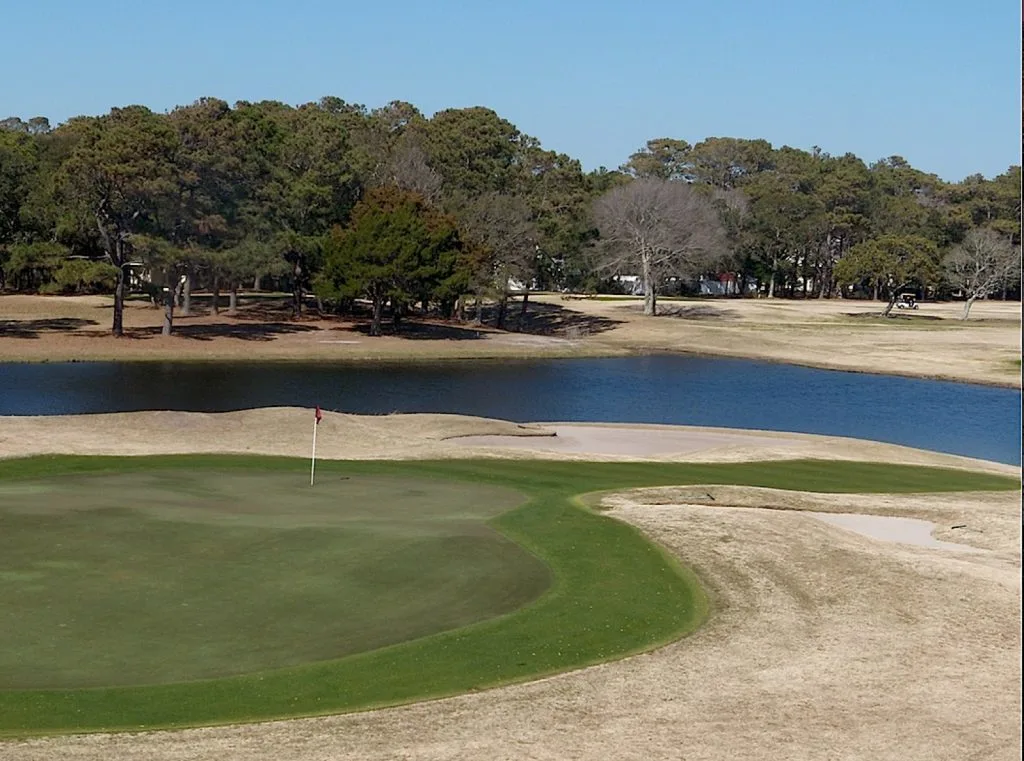
North Carolina’s three distinct geographic regions—the Atlantic Coast, the rolling Piedmont (spanning Charlotte, the Triad, and the Research Triangle), and the Blue Ridge Mountains—make planning a multi-stop public golf itinerary effortless year-round. In the Research Triangle, pairing a morning round at Lonnie Poole in Raleigh with neighbouring public favourites such as UNC Finley Golf Club in Chapel Hill or walkable, budget-friendly Hillandale Golf Course in Durham ($25–$29 walking) delivers remarkable variety within a 35-minute drive.
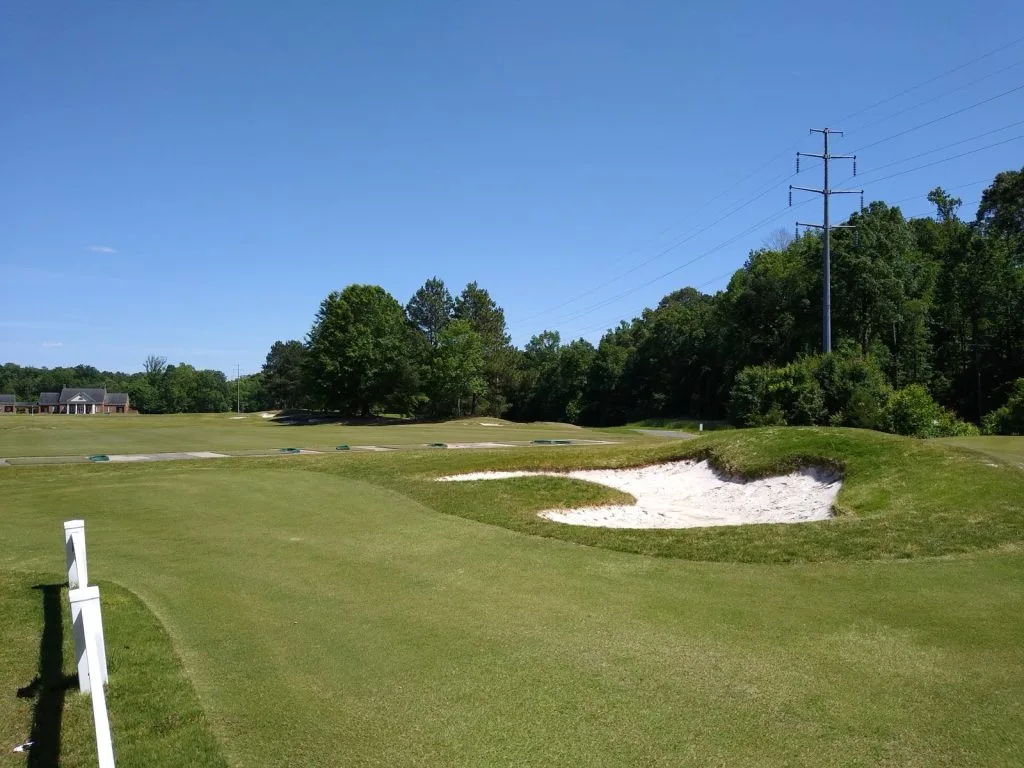
“From Donald Ross’s 1926 coastal pines in Wilmington and Robert Trent Jones Sr.’s 1974 PGA Championship stage at Tanglewood to Pete Dye’s lakeside bargain in High Point and Arnold Palmer’s Raleigh skyline test, North Carolina public golf is second to none.”
Practical Advice for Playing North Carolina Municipal Golf
- Dress for Coastal Humidity, Piedmont Sun & Mountain Breezes: Spring and autumn bring idyllic 18°C–24°C playing conditions across the Piedmont, while coastal Wilmington stays mild through winter and Asheville sits noticeably cooler at elevation. Build a versatile wardrobe around a breathable Firway Script embroidered golf polo, add our 280gsm quarter-zip pullover for crisp mountain mornings, and stow the packable Firway Tour windbreaker for coastal sea breezes. Explore the full collection in the Firway Golf Shop.
- Dial In Distances Over Bermuda & Bentgrass Transitions: Coastal and Piedmont layouts typically feature grainy Bermuda grass where grain direction and tight lies matter around Ross-style crowned greens, while Blue Ridge venues often transition to bentgrass greens. Launch the free Golfy Caddie web app for instant GPS yardages to front, centre, and back pins—plus club-by-club carry tracking across changing elevation.
- Build a Triad Architecture Loop Under $150 Total: Within a single 35-mile radius in the Piedmont Triad, you can play three architectural icons—Robert Trent Jones Sr.’s Tanglewood Championship ($59–$69), Rees Jones’s Bryan Park Champions ($60–$71), and Pete Dye’s Oak Hollow ($15–$46)—for less than a single round at most destination resorts.
- Respect the 7-Day Municipal Booking Drops: Wilmington Muni opens tee times 7 days ahead at 7:00 AM sharp, and both Tanglewood Park and Bryan Park release public slots 7 days out. Oak Hollow’s 14-day window and Lonnie Poole’s 10-day window allow earlier planning for weekend morning foursomes.
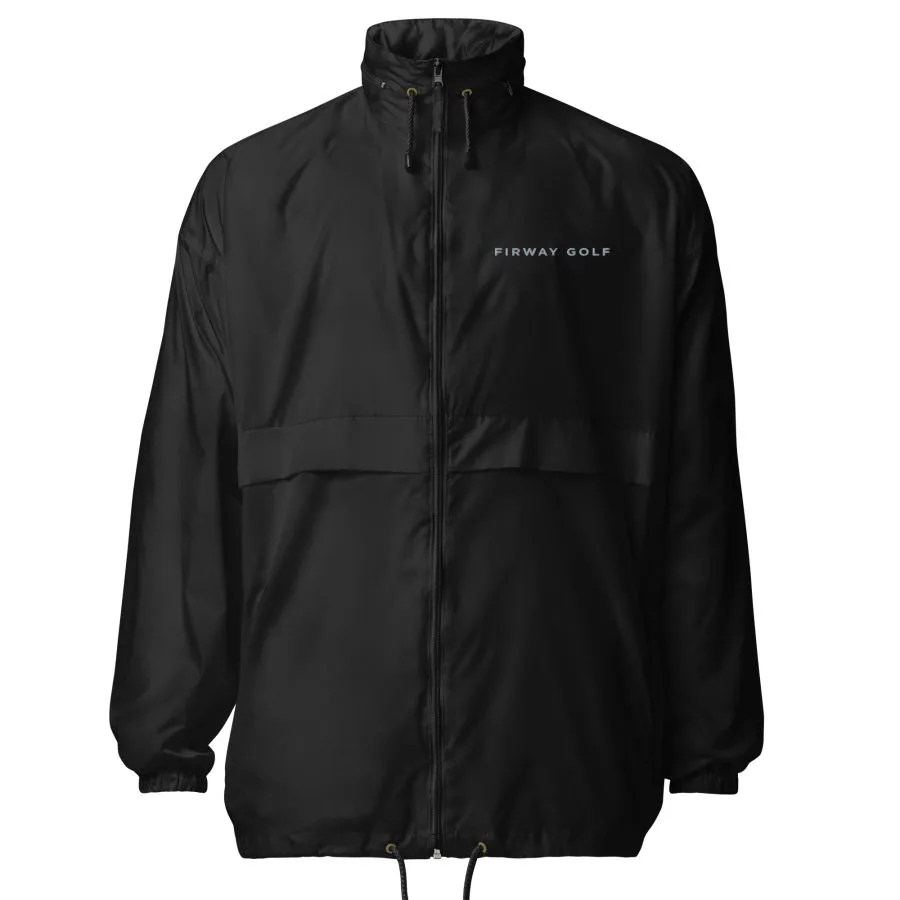
Firway Tour Full-Zip Golf Windbreaker — Black Edition
From £23.00Breathable heavyweight cotton & headwear built for warm walk-on rounds.
View PiecePlay Every Course in This Guide with Golfy Caddie.
Live satellite distances, wind & elevation adjustments, and smart club suggestions with zero subscription fees.
Open Free Caddie ↗Frequently Asked Questions
Which municipal golf course is the best in North Carolina? +
For pure Golden Age architecture and coastal atmosphere, the City of Wilmington’s 1926 Donald Ross layout—brilliantly restored by John Fought—stands atop the state’s city-owned courses. For championship pedigree, Forsyth County’s Robert Trent Jones Sr. Championship Course at Tanglewood Park (host of the 1974 PGA Championship) and Greensboro’s Rees Jones-designed Bryan Park Champions Course (2010 U.S. Amateur Public Links host) lead the Piedmont Triad.
How far in advance can visitors book North Carolina municipal tee times? +
Most North Carolina municipal courses release public tee times 7 days ahead: Wilmington Municipal opens online 7 days out at 7:00 AM, Tanglewood Park and Bryan Park open 7 days in advance, and Mecklenburg County’s Harry L. Jones, Sr. Golf Course follows a 7-day rolling window. High Point’s Oak Hollow allows bookings 14 days ahead, while NC State’s Lonnie Poole opens to the general public 10 days in advance.
What is the best-value municipal golf course in North Carolina? +
Pete Dye’s lakeside Oak Hollow Golf Course in High Point offers extraordinary value with weekday walking rounds starting around $15–$20 and full 18-hole cart rates under $46. Wilmington Municipal ($33–$48 walking) and Asheville Municipal ($32–$42) also deliver authentic Donald Ross architecture at everyday civic prices.
What is the status of Asheville Municipal Golf Course in 2026? +
Following severe Swannanoa River flooding during Hurricane Helene, Asheville Municipal Golf Course’s historic back nine is open and operates as an 18-hole dual-loop layout while the front nine undergoes long-term restoration (targeted for completion around mid-2028). Neighbouring Black Mountain Golf Course, 20 minutes east, has also completed its full 18-hole recovery, including its famous 747-yard Par-6 17th hole.
More Regional Course Guides
The 7 Best Municipal & Public Golf Courses in Colorado (2026 Guide)
The 7 Best Municipal & Public Golf Courses in Massachusetts (2026 Guide)